
CFR Education: Sources of Energy: A Comparison
Provided by: Council on Foreign Relations|Published on: September 11, 2023|Last updated: August 17, 2026
Grades: 9, 10, 11, 12, AP
Type: Data, Graphs, and Maps
Subjects: Earth and Space Sciences, Economics, Mathematics
Authors: CFR Education
Location: Earth
This resource has been reviewed by SubjectToClimate's climate scientists and verified for scientific accuracy and up-to-date information. Learn about our review process →
This resource has been reviewed by SubjectToClimate's climate scientists and verified for scientific accuracy and up-to-date information. Learn about our review process →
Synopsis
- This section examines fossil fuels, the different kinds of renewable and alternative energy sources, and the strengths and weaknesses of each energy source.
- There is a table that compares energy sources, an interactive global map that displays the breakout of electric power consumption by energy type for various countries, a linked lesson plan for the entire module, and a linked discussion guide for higher education classes.
- This is the sixth section of the World 101 Climate Change module.
Teaching Materials
Positives
- The pie charts on the interactive map can be shared online or via email.
- This section is well-organized and concise.
Additional Prerequisites
- Students should know what greenhouse gases are, where they come from, and how they impact the planet.
- The data isn't available for all of the countries on the map.
Differentiation
- This section could supplement a classroom activity where students research how Americans feel about renewable energy.
- This section could enhance a classroom discussion on the political obstacles that are hindering green energy production in America.
- Teachers could go over the main idea of key paragraphs in order to ensure comprehension.
- This section could support an in-depth lesson on the mechanics of various renewable/alternative energy technologies.
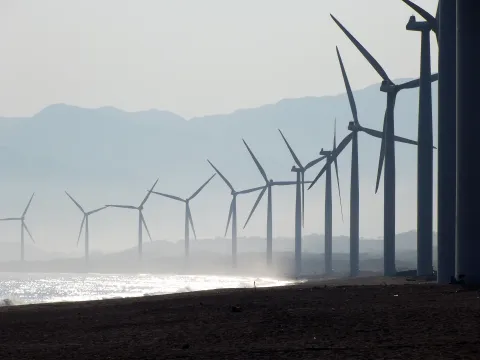
This website from World 101 and the Council on Foreign Relations provides a great resource for teachers looking to teach their students about sources of energy and moving towards clean energy. The site provides informative and interactive text that discusses the three main categories of energy sources: fossil fuels, alternatives, and renewables. Solar power harnesses the sun’s light directly into electricity when the sun is out. Wind power is created when the wind spins a turbine or a windmill located on land or offshore. Nuclear energy is produced at power plants by the process of fission. Also included in this resource is a lesson plan that includes discussions, handouts, and a presentation. This resource is well researched and encompasses everything a teacher would need to give a lesson on the effects of climate change.
Teaching Tips
Standards
Resource Type and Format
Scientist Reviewed
This resource has been reviewed by SubjectToClimate's climate scientists and verified for scientific accuracy and up-to-date information. Our review process ensures that every resource in our library reflects the current state of climate science.
Learn about our review process →