
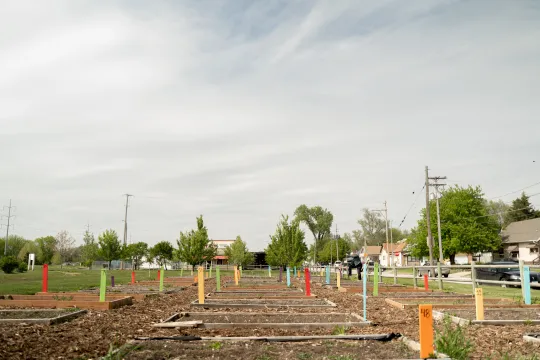
Community Sustainability Working Group
Provided by: Wisconsin Initiative on Climate Change Impacts|Published on: September 5, 2023|Last updated: July 16, 2026
Grades: 9, 10, 11, 12, AP
Type: Articles/Websites
Subjects: Science, Economics, Civics
Authors: Wisconsin Initiative on Climate Change Impacts
Location: North America, North America > United States, North America > United States > Wisconsin

This resource has been reviewed by SubjectToClimate's climate scientists and verified for scientific accuracy and up-to-date information. Learn about our review process →
This resource has been reviewed by SubjectToClimate's climate scientists and verified for scientific accuracy and up-to-date information. Learn about our review process →
Synopsis
- This article provides an overview of the effects of climate change on Wisconsin communities, how the working group supports communities, links to reports and local stories in Wisconsin, and provides solutions and strategies for mitigation and adaptation.
- The working group addresses the complicated nature of community planning for climate change, as it happens at multiple governmental and organizational levels simultaneously, with different priorities and levels of funding.
Teaching Materials
Positives
- The working group effectively addresses the realistic requirements needed to implement climate change solutions that are often secured at the governmental level (such as funding, expertise, data, research, and training).
- Community stories are linked at the bottom of the webpage as resources for understanding community action and impacts related to climate change.
- The working group acknowledges environmental justice issues, such as the differential burden that disenfranchised communities bear related to climate hardships, and recognizes the need to build climate resiliency for these groups.
Additional Prerequisites
- Students should be familiar with terms such as climate resiliency, adaptation, subsidy, sustainability, and vulnerability assessments.
- Students should have a basic understanding of how land use, energy use, and agriculture can contribute to climate change.
Differentiation
- Before exploring the working group's site, ask students what they think their communities may be doing to address climate change.
- It is recommended that parts of the linked Community Sustainability Assessment Report is utilized in the classroom as a way to more specifically understand community planning processes.
- Consider having students choose one of the eight stories linked at the bottom to read and then have students form groups to discuss how the story relates to climate resiliency, adaptation, or community impacts from climate change.
- There are opportunities for interdisciplinary study with science and civics, as students explore how governments prioritize and implement climate change resiliency measures.
- A working group report linked in the article is an excellent resource for diving deeper into sectors and policies that can be addressed at the community level including energy, transportation, flooding, agriculture, urban planning, and housing.
This is a thorough summary of the issues facing Wisconsin communities as a result of climate change. The page is thoroughly sourced with all resources catalogued at the bottom of the page. This resource is recommended for teaching.
Teaching Tips
Standards
Resource Type and Format
Scientist Reviewed
This resource has been reviewed by SubjectToClimate's climate scientists and verified for scientific accuracy and up-to-date information. Our review process ensures that every resource in our library reflects the current state of climate science.
Learn about our review process →