
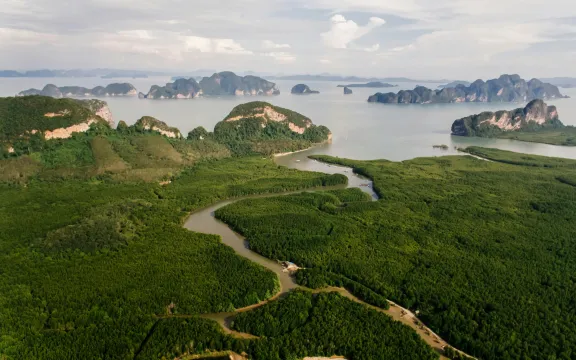
Estuary Education: Where Rivers Meet the Sea
Grades: K-12
Type: Articles/Websites
Subjects: Science, Geography
Authors: Research Reserve Staff
Location: North America > Puerto Rico, North America > United States > Alabama, North America > United States > Alaska, North America > United States > California, North America > United States > Delaware, North America > United States > Florida, North America > United States > Georgia, North America > United States > Maine, North America > United States > Maryland, North America > United States > Massachusetts, North America > United States > Mississippi, North America > United States > New Hampshire, North America > United States > New Jersey, North America > United States > New York, North America > United States > Oregon, North America > United States > Rhode Island, North America > United States > South Carolina, North America > United States > Texas, North America > United States > Virginia, North America > United States > Washington
This resource has been reviewed by SubjectToClimate's climate scientists and verified for scientific accuracy and up-to-date information. Learn about our review process →
This resource has been reviewed by SubjectToClimate's climate scientists and verified for scientific accuracy and up-to-date information. Learn about our review process →
Synopsis
- This resource from NOAA includes a variety of materials for both students and teachers to learn about estuaries.
- The resource includes data, interactive maps, video libraries, and other information for estuaries in Alabama, California, Delaware, Florida, Georgia, Maine, Maryland, Massachusetts, Mississippi, New Hampshire, New Jersey, New York, North Carolina, Ohio, Oregon, Ohio, South Carolina, Texas, Virginia, Washington, Wisconsin, Alaska, Puerto Rico, and Hawai'i.
- The resource also includes lesson plans, teacher learning opportunities, news, and other valuable materials.
Teaching Materials
Positives
- Teachers can benefit from the available professional development opportunities.
- Students will love seeing videos from the estuaries near them, providing opportunities for place-based learning.
Prerequisites
- Depending on the activity, students may benefit from having map skills and knowing what an estuary is.
- Students may also want to know if there is an estuary near them.
Differentiation & Implementation
- Students can discuss the biodiversity in an estuary and how climate change and other human activities threaten that biodiversity. Teachers can link to human-induced impacts like drought, invasive species, overharvesting, or land use change.
- The resource includes many lesson plans and other materials for classroom use under Estuary Education Resources.
- Language arts teachers can use the News and Announcements section in a summarization exercise, where students read an article and summarize it for the class.
- Social studies students can use the Estuary Reserve Locations map and additional research to create a travel brochure for one or a few of the map's locations.
- Math and science teachers can use the Graphing and Export System feature to support learning goals in the classroom. This feature also includes a Teach with Data section, available in the About Data dropdown menu.
This resource is a hub of estuary educational material, including lessons, news, videos, and access to live NOAA data. Although not all lessons are focused on climate change, one excellent lesson is included that explores the connection between climate change and estuaries. This resource is clear, well-organized, based on sound science, and recommended for teaching.
Teaching Tips
Standards
Resource Type and Format
Scientist Reviewed
This resource has been reviewed by SubjectToClimate's climate scientists and verified for scientific accuracy and up-to-date information. Our review process ensures that every resource in our library reflects the current state of climate science.
Learn about our review process →