
Greenhouse Gas Emissions and Consumerism Unit
Provided by: Ten Strands|Published on: July 10, 2025|Last updated: July 16, 2026
Grades: 9, 10
Type: Lesson Plans
Subjects: Chemistry, Engineering
Authors: Seeds to Solutions, Ten Strands
Location: North America > United States > California
This resource has been reviewed by SubjectToClimate's climate scientists and verified for scientific accuracy and up-to-date information. Learn about our review process →
This resource has been reviewed by SubjectToClimate's climate scientists and verified for scientific accuracy and up-to-date information. Learn about our review process →
Synopsis
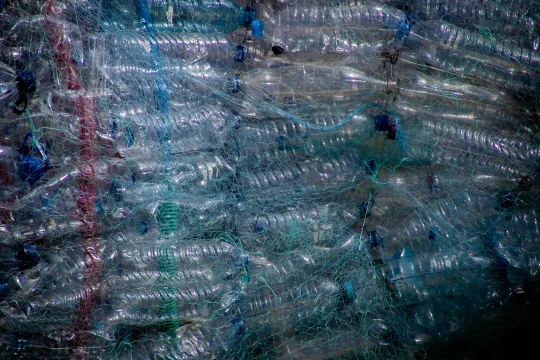
- In this 10-lesson Seeds to Solutions unit from Ten Strands and the San Mateo County Office of Education, students will evaluate the impact that consumer goods such as water bottles, electronics, and clothing have on climate change.
- Students will discuss the pros and cons of consumer goods, analyze their life cycles, explore related chemical reactions, connect the greenhouse effect to gases from extraction, production, and disposal, assess which goods impact climate change most, examine consumption and production trends since the 1950s, create a model of their climate impact, investigate production issues from an engineering perspective, and implement solutions.
Teaching Materials
Positives
- Through this unit, students will learn several useful life skills, such as breaking a large problem into sub-problems.
- This unit includes multiple elements that help students feel a sense of ownership over the project.
Prerequisites
- Students should already be familiar with climate change and have a general idea of how human activities cause it.
- It may benefit students to understand chemical reactions before beginning Lesson 3.
Differentiation & Implementation
- All teachers, but especially language arts teachers, can use the Text Annotation Key and collaborative reading protocol from Lessons 2 and 6 outside of this unit as an established practice for reading and annotating a text.
- If teachers do not have the time, resources, or class set up that is conducive for the stations in Lesson 3, these stations can be performed as demonstrations instead.
- To make community connections, teachers can incorporate a community engagement piece into the action plan in Lessons 9 and 10.
- In Lesson 10, students can create video presentations or use other methods to communicate their action plans to the group without having to present live.
- If possible, teachers can collaborate across subject areas for students' implementation projects. For example, language arts classes can support writing components such as social media posts or emails, and math classes can support data collection and analysis.
This resource guides students through understanding life cycle greenhouse gas emissions of common consumer goods. The slideshows and readings are exceptionally well-sourced and feature a nuanced explanation of the science of greenhouse gas emissions and how these gases impact the global climate. This resource is recommended for teaching.
Teaching Tips
Standards
Resource Type and Format
Scientist Reviewed
This resource has been reviewed by SubjectToClimate's climate scientists and verified for scientific accuracy and up-to-date information. Our review process ensures that every resource in our library reflects the current state of climate science.
Learn about our review process →