

A Global Concern: Antarctica Sea Ice Volume Keeps Falling
October 3, 2026

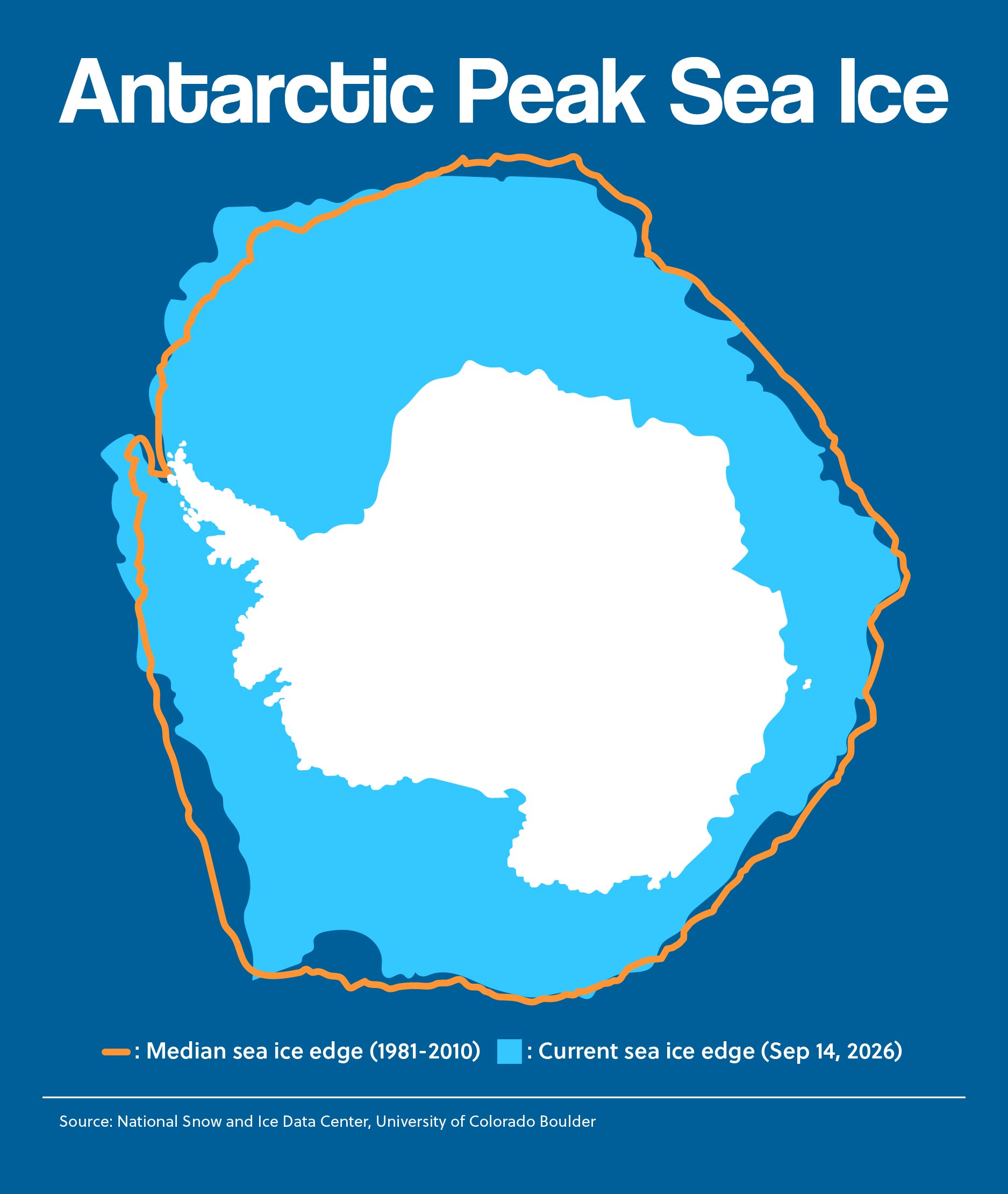
Antarctica continues losing ice. The continent's yearly winter ice sheet just reached its third-lowest level on record. But scientists don't know exactly what that means for the rest of the planet.
Sea ice on the world’s coldest continent fell a million square kilometers. That's roughly 400,000 square miles below its long-term average. This means that the four lowest years on record for sea ice on the continent have occurred over the previous four years.
Melting sea ice can have an enormous impact on the rest of the planet. It raises sea levels and threatens coastlines. Roughly 1 billion people live in coastal areas. And 1 million live within 1 meter, or 3.3 feet, of current sea level. This makes them very vulnerable to rising sea levels.
Melting ice on Antarctica, scientists say, is due to hotter air. That air is warming because of human activity. The biggest factor: greenhouse gases emitted from gas-run vehicles and coal- and natural gas-fueled power plants.
“The past four winters have had the lowest sea ice maximum on record. That’s a very clear indication of a system that has changed,” Ariaan Purich told The Guardian. He's a Southern Ocean expert in Melbourne.
“This is not a one-off event any more. The sea ice is no longer covering the same extent of ocean that it used to. We are seeing low winter after low winter and that suggests the sea ice is behaving differently because we have warmed our climate.”
How much ice will continue to melt this century is unknown. But a study published recently in the journal Nature Geoscience found that Antarctica’s ice loss is now locked in. It won’t recover even if the world limits global warming to 1.5 degrees Celsius. That's the limit called for in the Paris Climate Agreement of 2015. That's what two scientists wrote in The Conversation.
Reflect: Why can it be hard for people to take action on problems that unfold slowly over many years?
News brought to you by 
Read More News Stories Today!