

Super El Niño's Double Edged Sword: Deadly Floods, Blooming Desert
October 7, 2026

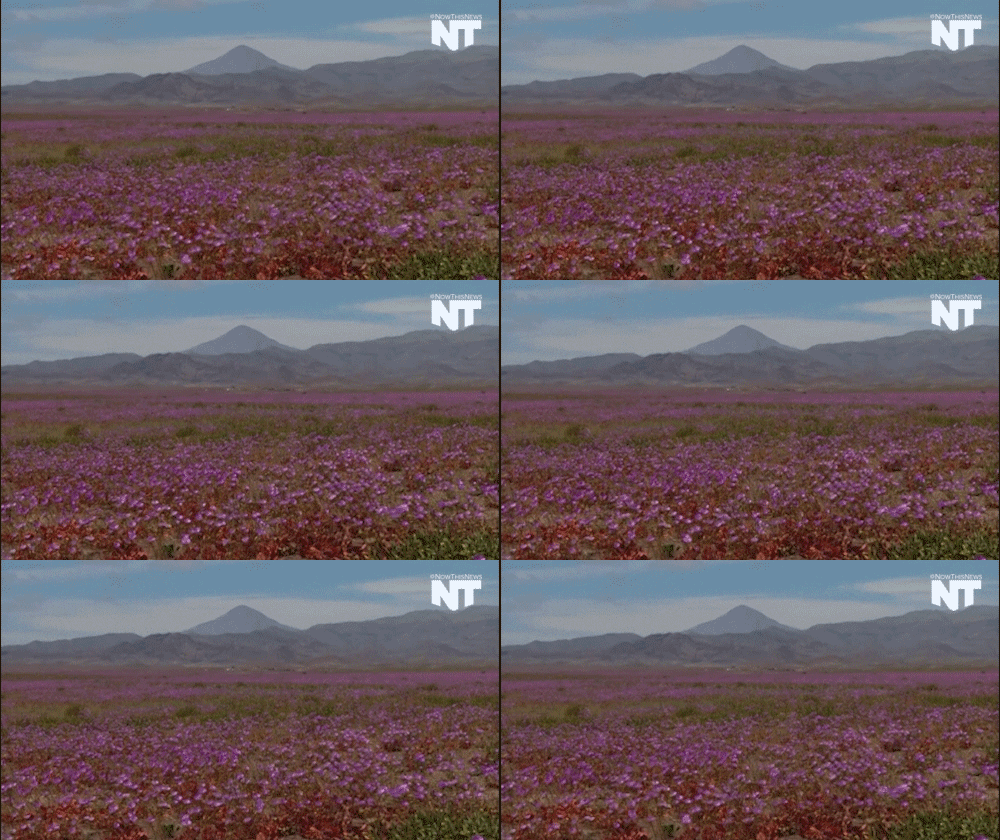
This year’s super El Niño weather pattern is at least partly to blame for a string of deadly disasters, including in Chile. Heavy rains and flash floods killed at least 13 people there in July. Yet it has also produced displays of great beauty, like the rare bloom of millions of flowers in one of the world’s driest deserts.
The Atacama Desert in Chile receives less rainfall than any place on Earth, except the poles. On average, it gets roughly 0.6 inches per year. Some experts say it has gone hundreds of years at a time without getting any rain. The Atacama mostly appears as a barren expanse of rocky, brownish soil. It's wedged between two mountain ridges that block most rain clouds.
Super El Niño has changed that, for now.
El Niño weather events generally happen every two to seven years. The pattern happens when surface temps of the Pacific Ocean warm and cause air currents to shift. This year, the Pacific is particularly warm. It's at least 2 degrees Celsius above normal. That's why some have labeled the 2026 El Niño “super.”
"Since rainfall records began (in the 1950s), these are the most significant figures in terms of volume," biologist César Pizarro told The Associated Press. The desert has received 6 to 7 inches of rain in some spots. “What has happened now has an origin, and it is called ‘super El Niño,’” he said.
The Atacama will be covered by more than 200 plant species through November. The bloom has produced a thick carpet of vibrant flowers. They are part of the desert’s “germplasm.” That's the term for biological material that lies dormant, waiting for water or some other trigger to bloom. The display has drawn visitors. Chile’s tourism industry expects roughly 300,000 overnight stays from those hoping to glimpse the rare event.
Reflect: What's something rare you would travel a long way to see in person?
Gif of the Atacama Desert in Chile from Giphy.
News brought to you by 
Read More News Stories Today!