
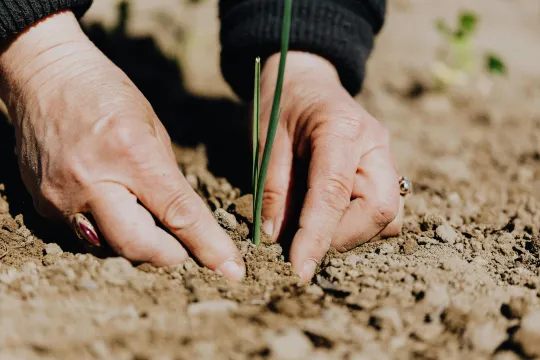
How Regenerative Farming Can Help Combat the Climate Crisis
Provided by: NowThis Earth|Published on: April 27, 2021|Last updated: July 16, 2026
Grades: 6, 7, 8, 9, 10, 11, 12
Type: Videos
Subjects: Biology
Authors: NowThis Earth
Location: Earth
This resource has been reviewed by SubjectToClimate's climate scientists and verified for scientific accuracy and up-to-date information. Learn about our review process →
This resource has been reviewed by SubjectToClimate's climate scientists and verified for scientific accuracy and up-to-date information. Learn about our review process →
Synopsis
- This video by NowThis Earth describes what regenerative farming is and how it can be used to rebuild topsoil and provide a sustainable method of producing food.
- Students will understand how industrial farming practices harm the soil and why the soil is an important resource to be preserved.
Teaching Materials
Positives
- This video shows students how less intensive farming practices are beneficial for the planet.
- The speaker is very knowledgeable and passionate about what they do.
Prerequisites
- You can introduce information about industrial farming and fertilizers prior to showing this video.
- Students should understand climate change and carbon sinks.
Differentiation & Implementation
- Students can start their own compost bin at home or research the benefits of mulch for community gardens.
- This is a great video to tie into science lessons about nutrient cycling, the importance of decomposers, and photosynthesis.
- Other resources with more information include this lesson and this mini-course.
Regenerative agricultural practice is beneficial to soil health and human health and can help cut down CO2 emissions. It is a good method for storing carbon in soil and can help reduce pest infestations on crops. This resource is recommended for teaching.
Teaching Tips
Standards
Resource Type and Format
Scientist Reviewed
This resource has been reviewed by SubjectToClimate's climate scientists and verified for scientific accuracy and up-to-date information. Our review process ensures that every resource in our library reflects the current state of climate science.
Learn about our review process →